





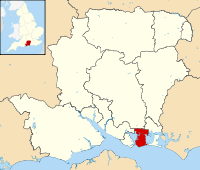
Portsmouth is a large city located in the South of England, approximately a hundred kilometers from London. One of the geographical features of Portsmouth is that most of the city is located on the island of Portsea, Portsmouth so can be called an island city of the island nation. Since ancient times this city was an important port, because the city has two major harbour of Portsmouth and Langstone. From the main town of Portsea is separated by the narrow Strait. Thanks to the warm air flow formed by the Gulf stream, the weather in Portsmouth is smooth and rarely fluctuates less than five and more than twenty-seven degrees.
The land, which is now Portsmouth was inhabited by local tribes long before Roman expansion, evidenced by the remains of typical primitive houses in England, found in other regions. The coming of the Romans the town became an important strategic point, intended to protect the southern coast of the island, this tells large area and significant strengthening. From the ground the fortress into a military port of Portsmouth has turned into the end of the third century, when one of the Roman generals changed the oath and started riding piracy, and later even tried on the crown of the Emperor of Britannia. A punitive expedition of the Romans was crowned with success and Portsmouth once again became a Roman city. In the beginning of the fifth century the importance of the city has increased dramatically, as there was built the shipyard. Since Portsmouth became the most important fortress of the Anglo-Saxon, later becoming the main base of the Navy.
At the end of XI century was built a small castle called Porchester, close to it after about half a century is the monastery. And was surrounded by a castle wall built in the time of the Romans. In the XIV century the castle turned into a Palace. From the mid-fifteenth century to the beginning of XVI-th city suffered many misfortunes that religious people explained as the result of imposed on the town of anathema. In 1508, the year of anathema, the cause of which was the murder not the most honest of the Archbishop was withdrawn. However, the beginning of the XVI century was a turning point in the life of the city, as the city was greatly expanded with new docks, shipyards, as well as several fortresses. Without any doubt, at that time, Portsmouth was the most advanced port property in the UK, in particular England’s first dry dock. A significant role in the development of Portsmouth was played by the patronage of Elizabeth, who visited the city in 1561, the year, and as considerable funds from the Treasury for the development of the city. Heavy misfortune was a terrible storm that claimed the lives of many people and caused heavy damage as the military fleet, and the settlements of peasants, destroying many houses in England around the coast.
About one and a half centuries in Portsmouth was the Royal Academy of the Navy, which trained naval officers for the whole of the English fleet. Tirelessly worked on further strengthening of the fortress. And Porchester the castle was rebuilt and was used as a prison, in particular the exiled prisoners during the Napoleonic wars, and near the castle, on the coast they were buried. Even now, after a couple of centuries, their remains are sometimes washed onto the surface. However, Portsmouth has always been a port city, and therefore his story cannot be viewed separately from the history of the English Navy. In particular, the end of the XVIII-th century, marked by the founding of the first Australian colonies, put an end to the use of Porchester as prisons, as prisoners were exiled to Australia. One of the most important and large spheres of city life is precisely the production and maintenance of the fleet, which accounted for a large percentage of the city’s revenue. In the early nineteenth-century Portsmouth was one of the largest ports in the world, and was also the lead in volume production of their shipyards. From that city left the legendary Admiral Nelson, who later won several brilliant victories, particularly at the battle of Trafalgar. One of the most important events for the city, though not associated with the military, was the birth of Charles Dickens. He was born February 7, 1812-th year.
Portsmouth, which was the most important military-strategic point at all times, had suffered greatly during both World Wars, is constantly subjected to bombing. After the end of the Second World War the city was restored and rebuilt. A large number of new buildings constructed in a style characteristic of houses in England at that time, forming entire neighborhoods, and the largest Lake of the Park, has become one of the largest in Europe. These neighborhoods were quickly populated by residents of Portsmouth. However, many relatively modern buildings were demolished because they did not fit the General architectural style inherent in the real estate of Portsmouth. To this day works associated with the maintenance of the Navy, are of paramount importance for the economy of the city, but is now developed and the other sides of the business, in particular there are branches of many multinational companies.
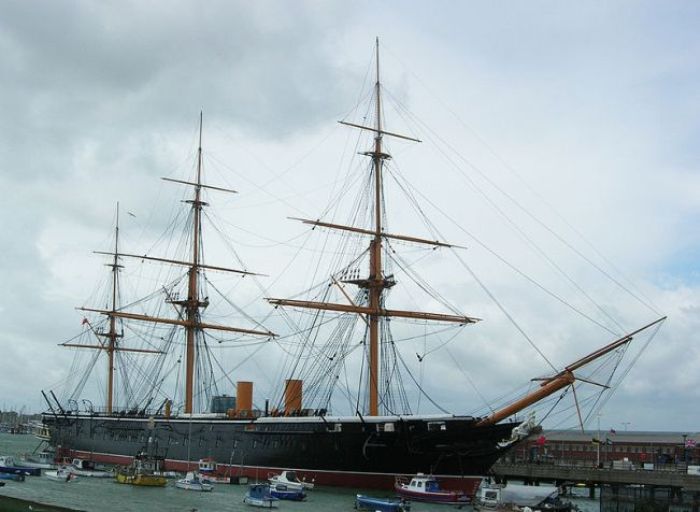
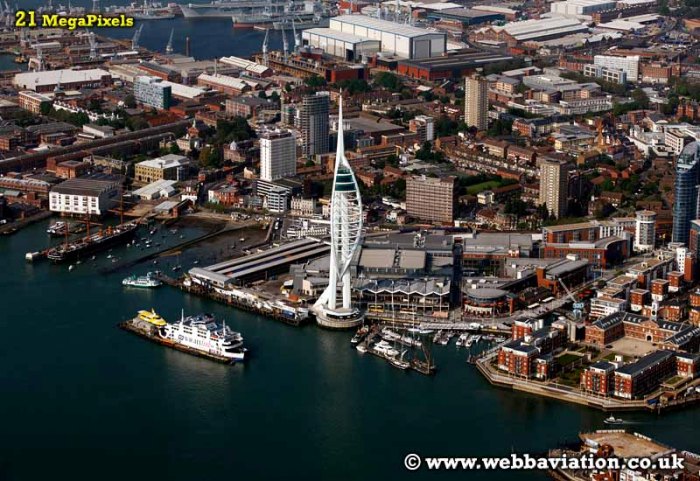
Despite the naval orientation of the development of the city, Portsmouth has many cultural and historical monuments, built during the long history of this city, of which, of course, connected with the sea. For example, tower-sails offers a magnificent view of the entire city, particularly to the shipyard where old ships. The oldest ship and the only surviving warship, built in the XVI century is “Mary rose”. It was a favorite ship of king Henry VIII. Another ship, HMS Victory, “Victory” was the flagship of Lord Nelson, and participated in the battle of Trafalgar. Also in dockyard is once the most formidable ship of the Navy, HMS “Warrior”, “Warrior”, one species of which was enough to bring peace, because he never participated in combat. From other sites it should be noted the Cathedral of Thomas Becket, the Cathedral of St. John the Evangelist, Round Tower, numerous museums dedicated to the Navy and its history, the house Museum, the birthplace of Charles Dickens. This two-storey house immediately adjoining other houses, in General the style typical of the houses in England. Nothing could portend that a boy born in this house, will gain worldwide fame, recognition and popularity.
®Mark Saruhanov
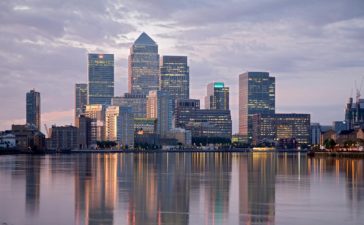
New project for investment in Canary Wharf


Vertus, the operator of real estate Canary Wharf Group, has presented the first building of its project "Build-to-Rent" , which...
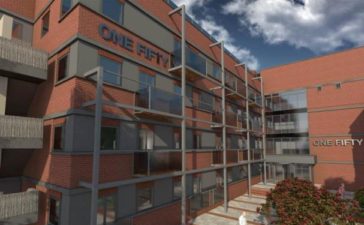

Studio apartment with one bedroom in the city of Swindon – £95000
Developers who create this project, very proud of their brainchild. It is no coincidence, because it is located in...


Apartment in Swindon one bedroom – £116000
Stylish and modern new one bedroom apartment occupying a spacious 38 sq. m. View on map Located in the...


House in Plymouth 3 floors 4 bedrooms £185000
Half the house has 3 floors, four bedrooms with an area of 102,67 sqm £185000, built-in garage and a garden...