





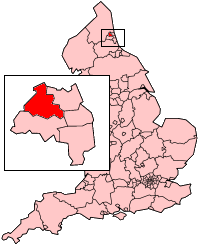
 The full name of this city – Newcastle upon Tyne, however, as in the UK and beyond, the city is called just Newcastle. It is located in the Eastern part of the island of Britain, the distance from the capital is about four hundred kilometers. South of the city is the river Tyne. The city’s population is approximately 274.000 people.
History of Newcastle and associated with the construction of Hadrian’s wall which was to protect the Romans controlled the land of the Britons from aggressive Northern tribes. Originally the site of the city was a Fort protecting the strategically important crossing of the river Tyne. In those days the settlement was called “Pons Aelius”, which translates from Latin as “the bridge of Elia”. Already then the population of the Fort was about two thousand people that made the fortress is very large for the time of settlement. Also the town was protected by a moat and stone wall.
As in many other areas of England, rebirth after the departure of the Romans began settling the lands plenumi the Anglo-Saxons. But the difference with Newcastle is that it’s just a theory, because no remains of settlements, such as is typical for the time of the house in England, has not been found. Only in the early seventh century, when the local kingdoms were United in one thing – Northumbria, was the beginning of cultural and economic development of the region, which is now Newcastle. In particular, there were built several monasteries, one of which was the Jarrow (Jarrow).
According to the testimony of one of the historians of those times in the lands of modern Newcastle and was a small settlement called Manchester. Nevertheless, this theory cannot be proven or disproven, as in the late ninth century the Danes landed on the island, and that part of them, commanded Halland, with fire and sword went all the surrounding land, not leaving even a stone. Largely because of this no reliable historical evidence on which historians have been able to compile a chronicle, telling the history to the Norman conquest. But the population of Northumbria was not going to give up so easy, time after time organizing the uprising. In particular, in the late seventies of the XI-th century, local inhabitants had killed the Governor and his team, after which moved to other cities, however, William the Conqueror has suppressed the rebellion. The next few years were marked by a constant struggle for liberation, the result of which was the cruelty and the numerous punitive expeditions of the Normans, to suppress all resistance, and for several centuries seriously reduce the rate of development of the entire region. In 1080, the year of one of the sons of William the Conqueror marched North. Arriving on land in what is now Newcastle, he immediately founded the castle, calling it simply “New Castle” that gave the city its name.
At the end of XI-th century was raised the last rebellion against William, however, and it was soon suppressed, and the Newcastle back under the power of the crown, became an important strategic point that allows you to control the entire region. Ruled the city and surrounding area, the Sheriff of Northumbria. In the future, the city is constantly strengthened, built new walls and fortifications, in particular the Black gate. Safety behind the walls of the city are attracted to the city traders, which certainly contributed to the development of the economy. Artisans from nearby villages were treated hides and wool, and mined lead, imported into the city ginger and pepper from the South, mainly from France. In the middle ages the city had great importance as a military fortress, as it was in the border lands between England and Scotland and had secured control of part of the border. In the XII century it was captured by the Scots, who kept him about twenty years, however, afterwards Henry II managed to recapture the castle and all the surrounding land. At the same time, the growing importance of Newcastle as a centre for trade, in particular substantially developed Maritime trade, so, at the end of the XIII century the city is actively traded with the States of Germany and the Baltic. The city is flocked more and more merchants, who settled near the castle. At the same time, the city constantly reflect the attacks of the Scots, and the economic development of the city has helped to strengthen defenses, in particular the walls and the moat. In the following centuries, the city continued to develop both economically and from the point of view of population growth, which significantly increased the volume of construction. For many traders Newcastle was a gold mine. Real estate prices were low relative to average house prices in England, economic development was by leaps and bounds. Were built many churches and monasteries, many of which are in the age of Henry VIII-Oh was dissolved and the buildings were transferred to the use of the guilds of the city for the usual for the UK real estate rent. In the future, was another important leap for the economy of Newcastle – join Newcastle’s rich coal region of Gateshead. Serious cash investment has allowed to increase volumes of extraction and processing many times. Even several centuries later, namely in XIX-th century the coal trade was a large part of the revenue of Newcastle.
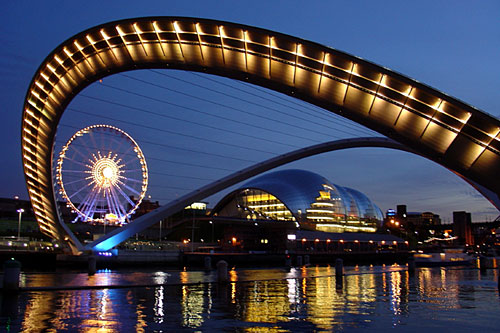
The same city was the birthplace of many talented inventors, for example, George Swenson, Charles Parsons, William Armstrong and Joseph Swan. Even with the fifteenth century the city had developed the production of glass, which significantly expanded by the middle of XVII century, and the century flourished. The industrial revolution and its consequences led to the fact that Newcastle became a centre of locomotive production, which were like the roads of the UK and was exported to other countries. It was also launched production of vessels in local shipyards. If at first built only wooden ships, then Newcastle has become one of the leaders in shipbuilding throughout the country, in particular it applies to warships, weapons which were manufactured here.
 In recent years Newcastle continues to maintain good growth. This contributes to advanced education, only two major UNIVERSITIES and cities in a year are trained about 50,000 people, many of whom receive technical education. At the end of the XX-th century, Newcastle was the leader in the pace of construction of residential houses in England were mostly built apartment buildings and was built on the site of the demolished slums. Of the most popular tourist attractions it is necessary to note the medieval castle Newcastle, the Cathedral of St. Nicholas and the virgin Mary, the Church of Thomas Becket, as well as several major museums. A significant impact on world culture the city provided by the eminent musicians who were born there. In the area of Newcastle, was born the world famous sting, the city became the birthplace of many legends of British rock music.
® Mark Saruhanov.
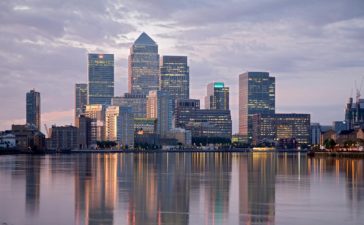
New project for investment in Canary Wharf


Vertus, the operator of real estate Canary Wharf Group, has presented the first building of its project "Build-to-Rent" , which...
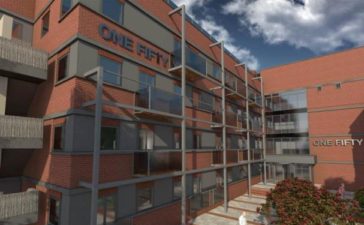

Studio apartment with one bedroom in the city of Swindon – £95000
Developers who create this project, very proud of their brainchild. It is no coincidence, because it is located in...


Apartment in Swindon one bedroom – £116000
Stylish and modern new one bedroom apartment occupying a spacious 38 sq. m. View on map Located in the...


House in Plymouth 3 floors 4 bedrooms £185000
Half the house has 3 floors, four bedrooms with an area of 102,67 sqm £185000, built-in garage and a garden...