





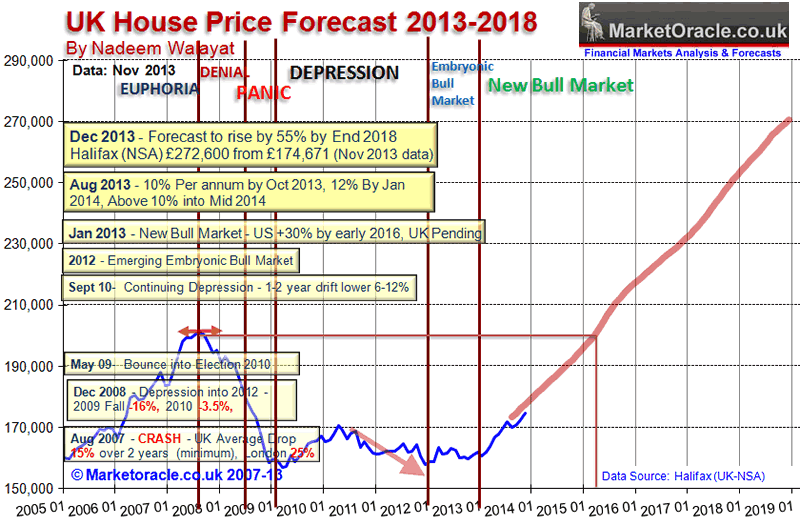
The growth rate of housing prices in the UK expected to keep the pace, launched in 2015, for 2016, while preserving regional differences.
According to Knight Frank, housing prices in the United Kingdom increased by 4.5% in 2015 . Prices for luxury properties have experienced a more moderate growth of about 1% in London and 3.1% in the rest of the country.
The January decision of the Bank of England left the base rate unchanged, as well as falling oil prices have led to what many economists predict that before 2017, the rate increase will not.
The continued period of low mortgage rates, rising wages and a shortage of new properties for sale will underpin strong growth in housing prices in the UK and in 2016.
In parts of London in 2015 lead in price rise where the prices for housing are not prohibitively high, dragging itself to the interests of investors and buyers of luxury super-expensive areas of London. So, the biggest growth was in the district of Islington, with price growth of 6.4%. Followed by the city and Fringe, with a price of 5.7%, hereinafter – Marylebone and Mayfair, Kensington .
The largest drop in prices happened in Knightsbridge, 6.1%, Notting hill – 3.8%, in South Kensington – 3.7%, 2.7% in London , 1.8% in Hyde Park and by 0.2 per cent in Belgravia.
The average rent in the whole of the UK grew by 2.7% , but stronger rent growth was observed in greater London, 4.1% In the areas of real estate Central London rents rose slightly, only by 0.7% per year. Rentals for luxury properties in the UK is closely linked with the global financial services sector and budget cuts European banks had an immediate impact on this sector of the market.
A feature of the beginning of the year should be called the adaptation of the UK property market to raise the Stamp duty is 3% for investors and second home buyers. The introduction of increased rates from 1 April 2016 will push buyers to complete the transaction before April 01, so as not to incur additional expenses that will push the real estate market. In future, experts also expect stagnation as demand still exceeds supply. People are actively interested in homes located in the area of transport interchanges and close to good schools.
® Alice Morgan. G. 05.01.2016

The property market in England stable, despite political chaos


The prices of houses and apartments in the UK increased by 2.1% annually to £234625 in November 2019, according to...


AIRBNB wins in London. The most popular areas
According to the study "End of Tenancy" London, Kensington and Chelsea are the most popular areas on the portal Airbnb...


Christmas wish list from Rebecca Scott
Rebecca Scott "FoundItLondon", the Creator of the independent "search engine" real estate in the UK for novice buyers, presented a...

What happens if you remove the VAT on maintenance work and landscaping?
Organization real estate and construction sectors in the UK - Federation of Master Builders and the British Property Federation the...