





The amazing history of the city.
When you set a goal to buy property in the UK, the first thing you probably think about property in London or other big city. But in Britain a lovely little town. Every town is rich with its history, traditions, festivals, folklore. Our story about the ancient city of bath (Bath) – a city that gives everyone a unique chance to plunge into the refined charm of the architecture of the English aristocracy, to touch the ancient history of the Roman Empire and feel the comfort of the achievements of civilization.
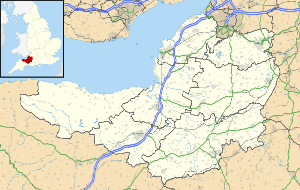
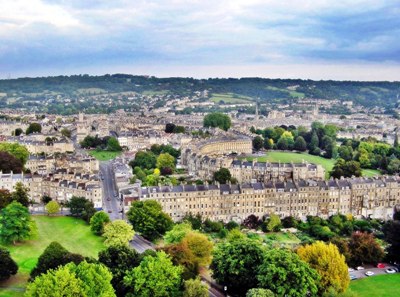
Bath is a city twenty kilometers from the city of Bristol, County Somerset, on the South-West of England. Bat is picturesquely situated in the valley of the river Avon and surrounded by limestone hills, which received the status Areaof Outstanding Natural Beauty, ie, an area of outstanding natural beauty. the population of the city is only about 84 thousand people – very little by modern standards, but not every larger city in England can boast such an unusual and eventful history.
The story of Bath goes back more than 2000 years. His appearance this city has hot springs which, according to some scientists, was well known to the ancient Britons. The place where a few decades later the Romans built their famous baths, was the main sanctuary of the Britons, and where was located the main from four sources, was a sanctuary of the goddess Sulis. The Romans came to these lands in the 60-ies of the BC, kept this cult, and joining Sulis with their own goddess Minerva, founded a temple here. After eighteen centuries, near the main sacred spring, archaeologists found the so-called “signs with the curse”, written in Latin, which the people appealed to the goddess of wisdom and justice SulisMinerva with a request to punish the offenders, which they were deceived.
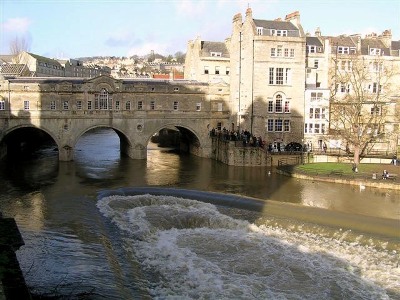 For three hundred years after the Romans arrived in bath there was active construction of the bath complex at the hot springs. On the instructions of Emperor Claudius, engineers have installed here in the clay soil, heavy oak piles, weighing several hundred pounds, built of stone baths lined with lead. In the second and third centuries of our era sources fully covered in wooden buildings, which were divided inside several areas: calidarium (hot bath), tepidarium (warm bath), and frigidarium (cold bath), but after the fall of the power of the Romans, all these buildings also fell into disrepair.
New life gave the city the king Alfred Ixv. It is when it is bath became a Royal possession, and that’s when it began construction of the Abbey, which then will go down in English history as the place of coronation of king Edgar, unifier of England, in 973 year. From around the X century the city began to mint the coin on the back of which was written: “BAD”, that Anglo-Saxon means “atthebaths” (“bath”). This is probably the first mention of the name of the city, which has survived to the present day.
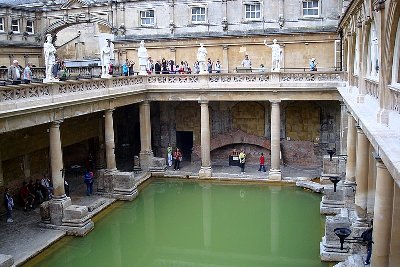 The entire period of early and developed middle ages life in the city ran its course, but in XVвеке the building of Bath Abbey – the main thing, basically forming a structure began to collapse. At the direction of the Bishop of Bath and Wales began to build a new building but do not have time to complete as Henry VIII announced the departure from Catholicism and the establishment of the Anglican Church throughout England. For Abbey, this meant complete oblivion, however, during the reign of Elizabeth he returned to the position of the main parish Church. Began a period of revival after a brief decline: gradually the bat was returned its status of the resort, was built a new bathhouse, and again reached the crowd of aristocrats.
During the Civil war in England, bat passed from hand to hand, but, in the end, the victory in the battle of 1643 he was seized by the royalists. However, the political vicissitudes were not so significant in the history of the city is of much greater importance was the treatise of Thomas Guidotti, a young chemist, graduate of Oxford, who in 1676 wrote about the benefits of mineral springs. The treatise did not go unnoticed and attracted great attention throughout the country to this unique city, which was a new impetus to its development.
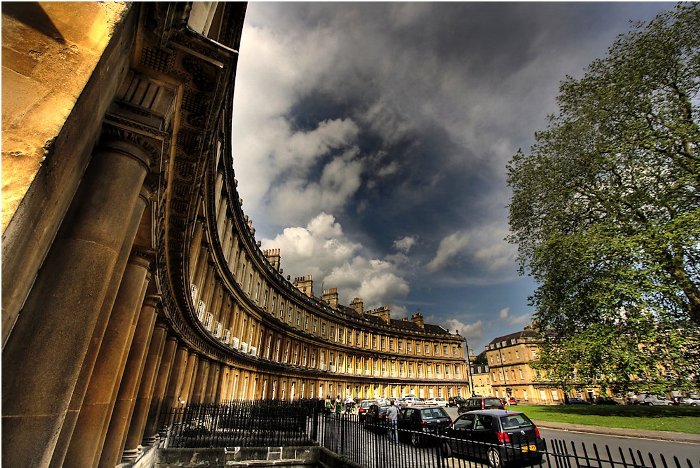
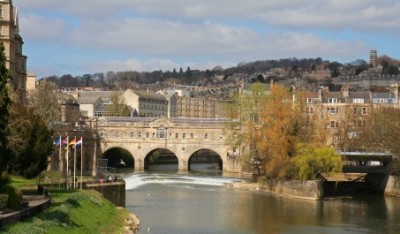 By the seventeenth century, the bat turned into a real center of social life in England: there was the theatre Royal on OldOrchardStreet, which immediately became one of the most popular places in the city. At the same time, was built architectural complexes Lansdown Crescent (the”Crescent Lansdowne”), theRoyalCrescent (“Royal Crescent”), the Circus and the famous Pulteney bridge over the river Avon.
By the beginning of the previous century. The bat appeared in all its glory. With a population of 40 thousand people, was not just one of the largest cities in Britain, but truly most brilliant centre of the cultural and educational life. The baht has managed to inspire a number of English writers and poets, musicians and artists to create these masterpieces of art. Among the most famous masters, caught by the charm of this city, Charles Dickens, Thomas hardy, Sir Walter Scott, Peter Gabriel. However, in the national consciousness of the British bat is associated, first and foremost, no one other than Jane Austen. She lived here with his family a little over three years: from 1801 to 1804. A small time writer so imbued with the spirit of this place, which even brought the action in her novels, such as “Nortengerskoe Abbey” and “persuasion”.
Bath is the birthplace of cinema: it was here, in his Studio in the 70-ies of the XIX century William fries-Greene began experimenting with celluloid and moving image, developing the early technology of photography. Could he imagine that in a hundred years, the baht will become a favorite place of many British Directors, which the town’s picturesque surroundings will make films based on novels English classics.
During the Second World war, the baht was committed three raids, resulting in the deaths of over four hundred people, and 19,000 buildings, among which was the unique monuments of medieval architecture, were destroyed almost completely. Burned down buildings on the Circus, “Royal Crescent,” was and though after years of restoration most of the buildings was restored, they still bear the traces of the terrible bombing.
In 60-70th years of the XX century, according to the plan for the restructuring of the city, some buildings constructed in the XVIII-XIX centuries was demolished, however, this action aroused the indignation of the public. In 1987 the city of bath gained the status of a monument of world heritage of culture that stopped the rebuilding of the city. However, the increase in population and change of rhythm of life demanded a change of buildings, designed in the Georgian style, modern, multifunctional structure, which would ensure the growing needs of residents and visitors alike. However, the administration of the Baht, the government and UNESCO managed to find a compromise between tradition and trends of the time, so today in bath is maintained a wonderful balance between elegant mansions of the English aristocracy the fashionable business centres. Due to this, in some places of the city and its surroundings and today you can feel the extraordinary atmosphere of “old England.”
After centuries of bat remains one of the most important cultural and educational centres in England, and theatres, museums, and other cultural institutions can be found in almost every corner. And just as in antiquity and modern times, bath is a place of attraction for tourists from all over the world. Come there every year 3.8 million tourists, who, like the Romans, who founded the city more than two thousand years ago, and wish to plunge into the waters of the famous hot springs and immerse yourself in the unique atmosphere of this town where every street is steeped in history.
® Tsoy Olga
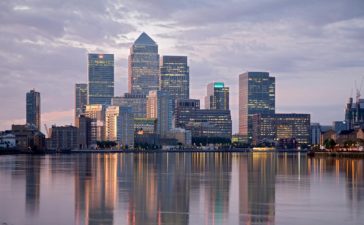
New project for investment in Canary Wharf


Vertus, the operator of real estate Canary Wharf Group, has presented the first building of its project "Build-to-Rent" , which...
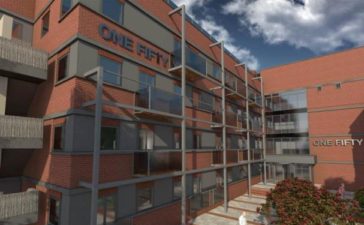

Studio apartment with one bedroom in the city of Swindon – £95000
Developers who create this project, very proud of their brainchild. It is no coincidence, because it is located in...
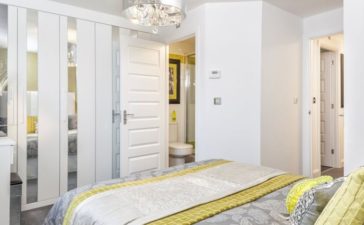

Apartment in Swindon one bedroom – £116000
Stylish and modern new one bedroom apartment occupying a spacious 38 sq. m. View on map Located in the...


House in Plymouth 3 floors 4 bedrooms £185000
Half the house has 3 floors, four bedrooms with an area of 102,67 sqm £185000, built-in garage and a garden...