





The history of the city of Chester.
The Roman legions used to to establish its dominion in Britain at the beginning of a new era, trying to gain a foothold in the conquered territories, and this task required them to concentrate sufficient military power. For protection from the local tribes cornubia and brigantes the Romans built numerous fortifications, built fortresses, and carried their settlements stone walls. Some of these Roman settlements managed to develop in the city, which to this day can be found on the map of great Britain, and whose museums priceless artifacts of antiquity – a reminder of the ancient Roman conquests. Among these towns is Chester, situated on the banks of the river Dee, a few miles from Liverpool and Manchester, in the County of Cheshire.
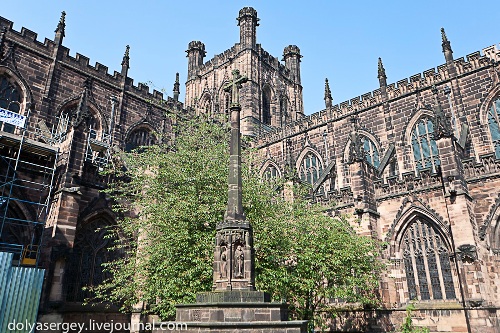
Chester is the largest of all fortifications created by the Romans in the British Isles in the 70-ies of the I century. The fortress was superior and York (Boerum), and London (Londinium) was built around the same time. In those days the area of the modern Chester was called Deva, Vistrix that, scientists believe, comes from two words: “virgin” – the name of pool of the river Dee and “Victrix” – from “Valeria Victrix” – the name of one of the Roman legions, which were stationed in this fortress. From the ancient times to have survived a lot of evidence of the greatness of the Romans. Near Chester to this day remains the famous shaft, built in 20-ies of the II century ad and for several centuries was the border of the Roman Empire. One of the most telling reminder is the UK’s biggest stone amphitheater, built in W Its height reached 12 meters, and scientists estimate that it could accommodate 8 to 10 thousand spectators.
The fourth century army is left virgin of Vistrix, and behind the walls of fortifications remained only the simple settlers and veterans. With the weakening of the Roman influence intensified local, Welsh and Anglo-Saxon tribes. To VI century Chester was already part of one of the Welsh kingdoms of Powys, but in 616, he played out a battle between the Welsh and Northumbrian, with the result that the Welsh were defeated. For Chester, this meant the beginning of the domination of the Anglo-Saxons. The city was renamed from the Welsh Aer-Leon in Legamaster, which translated means “City of the Legion”, and became the centre of the Anglican diocese of Chester: a few years after the battle here, the efforts of Werburga, who became the patron Saint of the city, was erected a temple. In the XIII century, in its place began to build a Church. John, which became the Cathedral.
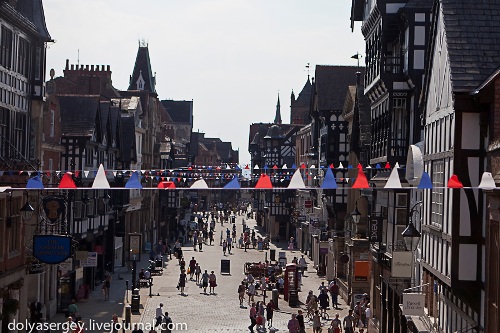
With Hvca after Chester by order of king Henry IV was passed into the possession of the English throne, the city began to develop. In 1092, was built Werburgh Abbey for protection from the raids of Celtic tribes wooden buildings were replaced by stone. In 1245 was built the famous Chester castle, which today is one of the main attractions of the city. In XII – XIII centuries, Chester had become a major trading center in its port trade was carried out with Italian, German and later Dutch merchants. As a reminder of these times in modern Chester remain the so-called Chester Mall.
In 1508 Chester became the centre of Cheshire. Thought it was the real heyday for the city, but in the following centuries as a result of wars, several of the plague and a major fire occurred some decline. But in XVII-XVIII centuries most of the buildings have been restored, and the city is again appeared in all its glory.
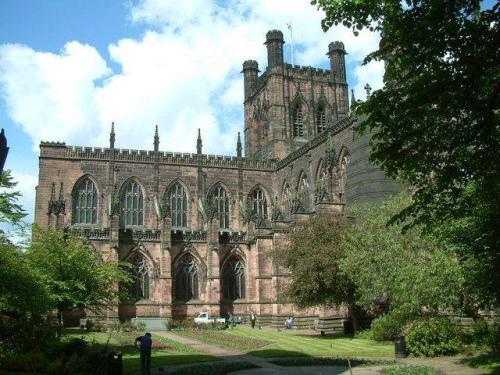
The industrial revolution did the Chester industrial city, but here opened a cotton factory, a new development was received by trade, has significantly increased the number of people. In the nineteenth century his work began Chester shipyard, was built by the Chester canal and two railway stations, one of which reached our days. It was at this time in Chester began to settle the rich land-owning aristocracy, which led to the emergence of new, prestigious residential areas.
After the world wars began active construction: there are many great apartment buildings that have opened new shopping centres such as the Grosvenor, Forum, actively developing transport connections. All this has made this one of the most ancient and beautiful town in the UK a comfortable place to live in the modern world.
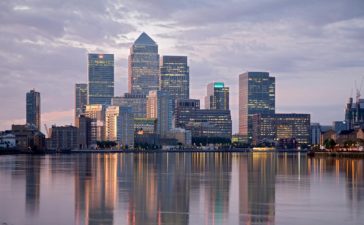
New project for investment in Canary Wharf


Vertus, the operator of real estate Canary Wharf Group, has presented the first building of its project "Build-to-Rent" , which...
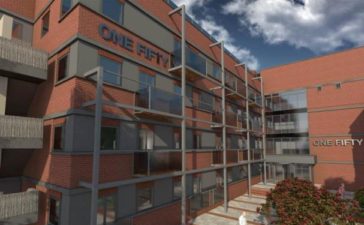

Studio apartment with one bedroom in the city of Swindon – £95000
Developers who create this project, very proud of their brainchild. It is no coincidence, because it is located in...
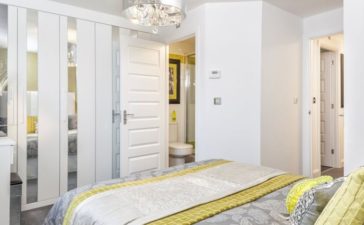

Apartment in Swindon one bedroom – £116000
Stylish and modern new one bedroom apartment occupying a spacious 38 sq. m. View on map Located in the...
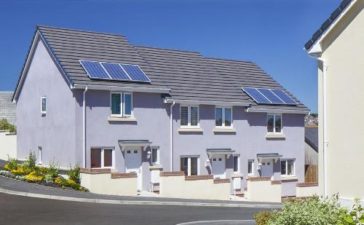

House in Plymouth 3 floors 4 bedrooms £185000
Half the house has 3 floors, four bedrooms with an area of 102,67 sqm £185000, built-in garage and a garden...