





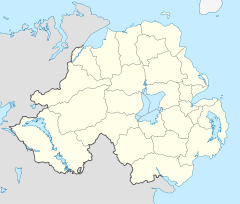
 Many call Belfast the capital of Northern Ireland, although officially this city is the only municipal center, the seat of local government, Parliament of Northern Ireland. Belfast is a large port, whose population is approximately 246.000 people, and if you count the surrounding area, about 580.000. The city is situated on the coast of the Irish sea, at the mouth of the river Lagan.
Unlike many other cities in the UK whose history goes back sometimes for more than two thousand years, Belfast is a relatively young city. The first written mention of the city dates back to 1177-th year, however, already then it was a well-fortified fortress of chivalry, founded by the Englishman John de cursi. Nevertheless, the history of Belfast as a city began much later, in the early seventeenth century, during the reign of king James, who ordered the colonization of the land (the current Belfast castle was built only in 1870-th year, and the original was completely destroyed). The English and the Scots, arriving in these areas, inhabit the surrounding land, built the first building is typical of houses in England style, and the castle was given to sir Arthur Chichester, which he rebuilt to your liking. Around the castle and was formed a small town. In particular in Belfast moved by many of the Protestant Scots who laid the Foundation for the development of industry, particularly light industry, especially linen and shipbuilding. By the end of XVII-th century the population reached 2,000 people. Continuing to build new housing in line with the General trend for the UK property. And by the beginning of XIX-th century the population had risen to 20,000. Over time the city developed, both economically and culturally, the latter also contributed to the opening of the University, which occurred in 1845, the year and the opening of the Opera house and the start of production of the local newspaper. Twentieth century development also is no exception, as Belfast became the centre of instrument-making and oil refining.
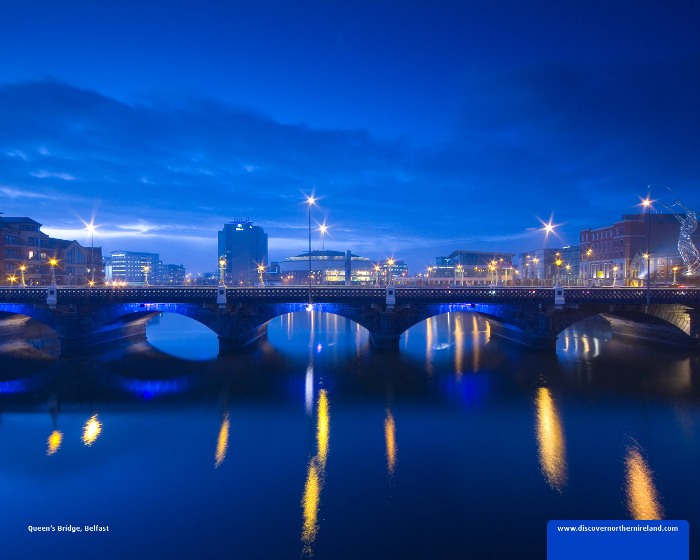
The shipyards of the city belongs to probably the most infamous ship in the world – the Titanic. Tourists are given the opportunity to visit the dock, where in 1911, the year Titanic was built, in addition to those interested in the details of this tragic event, always open doors to the Museum “Titanic Belfast”.
Ten years after Titanic was launched into the water tragic events took place in Ireland. In 1921, the year was a conflict between two opposing factions of Catholics and Protestants. In fact, this conflict has had equally weighty political reasons than religious, since one part of the population favoured accession to England, and the other fought for independence. Could be seen everywhere even local, but active hostilities, and only in the late twentieth century, after the victory of the Republicans, the opposition subsided. Belfast is unique in its kind tour. She is entirely devoted to urban graffiti, dedicated to the struggle described above. To this day, just by looking at these pictures, you can feel the atmosphere of those turbulent times.
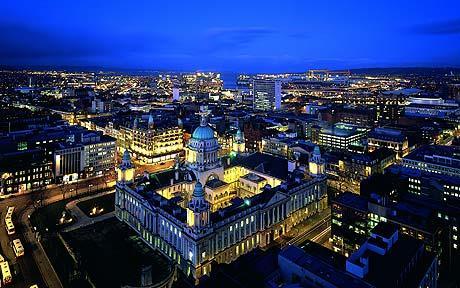
Despite the fact that Belfast is not very long relative to many other cities in England, and the age of its buildings can not compete with homes in London or, say, Edinburgh, in the town many historical monuments, one of which is the Cathedral of St. Anne. This Cathedral in the Romanesque style was completed in 1898 and is a major centre of Protestantism. Now near the building of the Cathedral is a busy street, Royal Avenue, where are located many shops, cafes and small galleries. Eight years later was built the city hall. This place attracts many tourists, largely due to a variety of free tours, where visitors learn about the history of the city, about the famous “Titanic”, as well as demonstrate a variety of monuments, including Queen Victoria. Belfast famous thanks to “the Green Mile”, known to every lover of beer. No less popular is the Golf, because that’s where there are such Golf celebrities as Darren Clark, Garam McDowell and Rory McIlroy, and Belfast is a lovely field for this game. Many in the city and museums like Ulster Museum or library Linear Hall – main repository of Irish literature. Continuing the theme of literature, it should be noted that the city is located a sculpture dedicated to Staples Clive Lewis, the author of the world famous cycle “Chronicles of Narnia”.
® Mark Saruhanov
New project for investment in Canary Wharf


Vertus, the operator of real estate Canary Wharf Group, has presented the first building of its project "Build-to-Rent" , which...
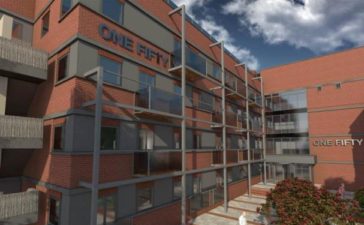

Studio apartment with one bedroom in the city of Swindon – £95000
Developers who create this project, very proud of their brainchild. It is no coincidence, because it is located in...
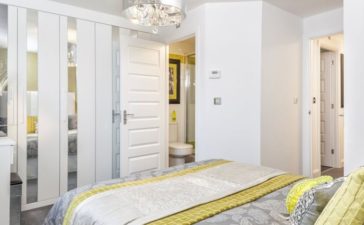

Apartment in Swindon one bedroom – £116000
Stylish and modern new one bedroom apartment occupying a spacious 38 sq. m. View on map Located in the...


House in Plymouth 3 floors 4 bedrooms £185000
Half the house has 3 floors, four bedrooms with an area of 102,67 sqm £185000, built-in garage and a garden...