





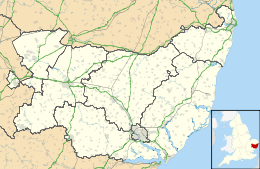
 Ipswich is located in Suffolk County, on the West Bank of the river Gipping, just in the place where it empties into the estuary of the river Orwell. The city is located just eighty miles from the capital of the UK. Also Ispwich is the administrative centre of the County of Suffolk and his largest city. The city has a population of approximately 120.000 people. The most developed sector of the economy of Ipswich is mechanical engineering. Also plays a big role in the travel business.
In the beginning of our era, when these lands were under the rule of the Roman Empire, through the current territory of Ipswich, passed an important trade route, it also was located several Roman FORTS and villas. But none of these FORTS became not to the settlement. Because after the departure of the Roman garrisons on these lands is virtually uninhabited. Only in the beginning of the sixth century, the first Germanic tribes founded several villages. Later, a century later, due to the fact that Redwald, pravitelei East of England, drew attention to the land, there was founded the port, and pre-existing settlements were expanded. Originally the town was named Gippeswyk. His location gave him a number of advantages, ensuring a fairly rapid pace of development. In the first place is a good location because direct access to the sea and the proximity of the river crossings and Gipping Orwell supported the development of trade with surrounding regions and with the Nordic peoples. By the end of the seventh century Ipswich became a center of pottery production based Frisian masters. Pottery produced in this town, dispersed throughout the East of England. In Ipswich and conducted other types of production, such as metal, carved horn and bone, and the loom, however, the scale of these works could not compare with the main – pottery. Of course, such a development could not result in population growth that steadily leads to large-scale construction.
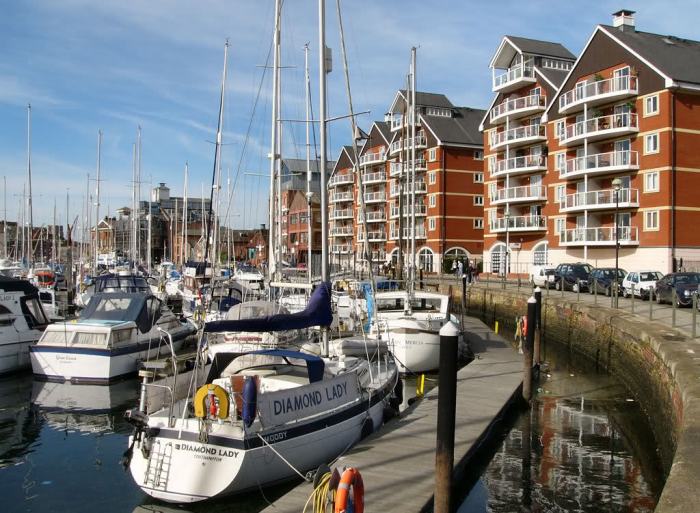
In the twenties of the eighth century the city was the leader in the pace of construction of residential houses in England. Growth and development of the city was not even disturbed by the constant raids of the Danes and Vikings that began in the second half of the IX century and ended only at the beginning of century XI-th. According to some historians, those Danes who settled in these lands and joined the population of Ipswich increased production volumes, primarily in agriculture, which helped the city become even more of a major center of trade for the entire region and even beyond. Another development in this direction was the fact that king John freed the city from a considerable number of taxes 1,200 year, which allowed the city to establish trade with other European States. The city’s population by that time exceeded two thousand people.
By the end of the XIII-th century, Ipswich had several markets and fairs held every week and attracting many merchants already understand the value of real estate of England, or rather in its commercial cities. Produced large amounts of wool, processed leather, including clothing leather as well as yarn. The main part of the business of life took place in the city centre, where you can buy goods from almost any city of England, and many things brought from continental Europe. Active trade was conducted in the city of Porto, a variety of goods in which it is difficult to describe. In many respects it is sound tax system has enabled the Ipswich to develop and grow. The city Treasury has been steadily growing due to the coming of the merchants from taxes and big revenues brought in rents with buildings belonging to the city, houses and plots of land that had an impact on the future of the real estate market in the UK. To the end of the XIII-th century the population of Ipswich was already three thousand people. By this time in the city there were several monasteries, including the Holy Trinity, St. Paul, St. Peter, and later built several monasteries of the order of Carmelites, Franciscans and Dominicans.
Over time, the city became a place of pilgrimage, which receives thousands of people, among whom were Henry VIII and Catherine of Aragon. Many of them were attracted to Ipswich statue of the virgin, which later was burned in London. Geoffrey Chaucer in “the Canterbury tales” described exactly Ipswitch merchants. Until the end of XVII century the city continued to develop and grow, in particular the population reached seven and a half thousand people. By that time, significantly changed the direction of production and economy. The city was very clean, that provides reliable operation of urban services, allowing relatively easy to survive the plague of 1665-year.
A similar development of the city continued until the beginning of the industrial revolution. In the XIX-th century the city attracted many workers from other regions, as in Ipswich were built many factories engaged in the production of various types of products, from tobacco to articles of iron, bricks and cement. Many centuries as an important trading centre, the city changed its specificity from the center of international trade, he became one of the centers of cabotage in England. The population grew to 66 thousand. However, in the last years of the twentieth century the city’s industry was in decline. However, the city does not stop program for the construction of affordable and luxury housing, modern for their respective homes in England technology. Active work on reconstruction of historical buildings, of which Ipswich is a great variety, and the project to maintain perfect cleanliness in the city is still in effect that allowed the city to become the cleanest city in the UK in 2007. Now Ipswich again returns to its former value in terms of the economy, and a major role is played by tourism. Every year the city welcomes approximately three million visitors, which makes the purchase of houses and apartments one of the most profitable investment from the point of view of real estate investment in the UK.
The main attractions of Ipswich are the Church. Margaret, St. Lawrence, Ne. Bartholomew, St. Peter, St. Michael, All Saints and Church of St. John the Baptist, as well as historic municipal buildings, including city hall. Many tourists are attracted by the annual festival of the arts Ipswich.
® Mark Saruhanov.
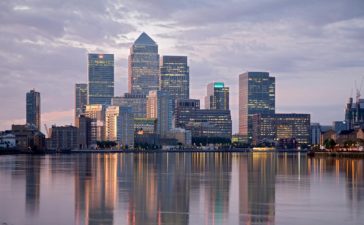
New project for investment in Canary Wharf


Vertus, the operator of real estate Canary Wharf Group, has presented the first building of its project "Build-to-Rent" , which...
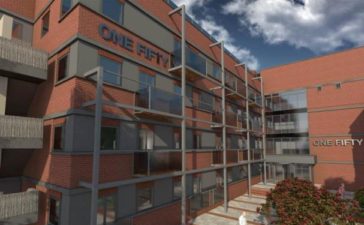

Studio apartment with one bedroom in the city of Swindon – £95000
Developers who create this project, very proud of their brainchild. It is no coincidence, because it is located in...


Apartment in Swindon one bedroom – £116000
Stylish and modern new one bedroom apartment occupying a spacious 38 sq. m. View on map Located in the...


House in Plymouth 3 floors 4 bedrooms £185000
Half the house has 3 floors, four bedrooms with an area of 102,67 sqm £185000, built-in garage and a garden...