





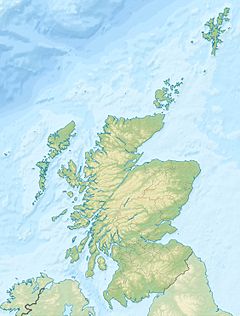
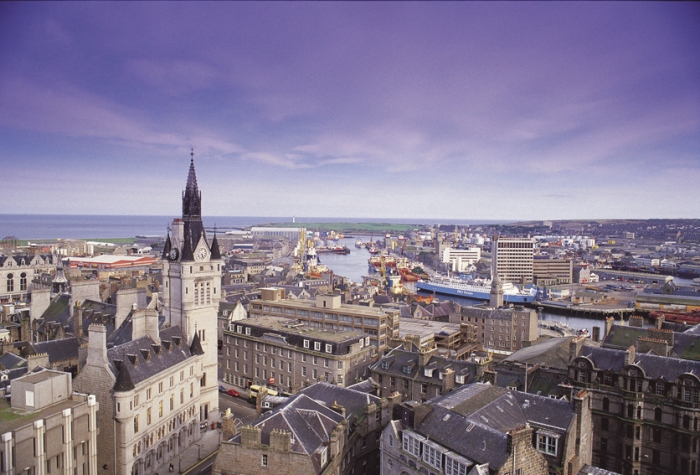
 Aberdeen is in the North-Eastern part of Scotland. The size and population of the city is in third place in the whole of Scotland. This port has important economic, administrative and cultural importance for the region of Aberdeenshire, the chief town of which he is, and for the whole of Scotland. Developed marine trade and fishing. Aberdeen has a unique architecture that is not characteristic of houses in England and Scotland. This is because at the local quarries was mined grey granite from which they built houses. The city has many informal names – Grey town because of the shade of gray of the buildings, Silver city, and “Oil (Energy) capital of Europe” found in the seventies of the twentieth century the oil fields in the North sea.
Aberdeen have a history that spans at least eight thousand years. The first settlement was founded by hunters and gatherers in the stone age. Since ancient times in the valley of the Aberdeenshire remained a strange stone circles built by the then inhabitants of this land four thousand years ago. The city itself was founded as a result of the merger of the two poselenii Old and New Aberdeen. The last inhabitants were mainly engaged in fishing at the mouth of the river Dee and trade. Roman expansion in this region began in the first century ad, when thousands of troops the Romans defeated the Picts, and seized the surrounding land. Thanks to the Romans to these lands came to Christianity, in particular, the first Church in the city appeared at the end of the sixth century the efforts of the St. Makar, a disciple of St. Mungo’s. Closer to the middle of the XII century was an important stage in the development of the city since king David I granted the city a rather large legal and economic freedom. Finally these rights were approved by Robert Bruce, who conquered the city from the British and gave the city an almost complete independence, because it valued the Aberdeen and respected by its residents, largely due to the fact that the inhabitants of Aberdeenshire sheltered him, and helped in many battles against the British.
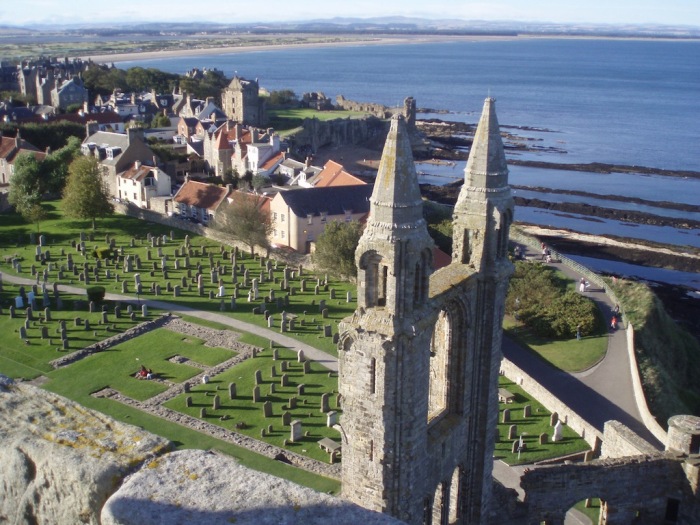
Twenty years later Edward III burned the town, however, soon enough the city was rebuilt, and New Aberdeen were significantly more and ukreplennye Old. In the city were built many new houses of gray granite that distinguishes the architecture of Aberdeen, from the General style, peculiar to real estate in the UK, in particular Scotland. In the future, the city has been significantly strengthened, which helped to cope with the regular attack troops from neighbouring counties. Seventeenth century, more precisely its middle, was a big challenge for the city, as it repeatedly took troops from both sides, and the final blow was struck by the plague.
Later, in the XVIII century was built the various municipal buildings and public institutions, such as hospital and town hall, also improved the old and building new roads, including city streets, some of them carried the most advanced at that time ideas. A kind of revival of Aberdeen found closer to the beginning of the industrial revolution when the city became an important item on the fishery and shipbuilding, helped by the newly built harbour and docks, a port of the UK property at the time. In the second half of the century, Aberdeen had already developed social services and a well-established system of water supply and sanitation. Two parts of the city, which was officially different settlements were United only in 1891, the year. Also interesting is the power structure of the city, which was composed of 43 councillors and the Lord Mayor, together constituting the City Council of Aberdeen. The city has representatives in all structures of power – the Scottish Parliament, UK Parliament and European Parliament.
Historically the town has always been inextricably linked with the sea. In the sphere of production is expressed in advanced at all times, shipbuilding and fisheries. Also nebulosity was the textile and paper industry. However, with a sharp jump technologies of the twentieth century these areas have slowly faded into the background, making way for the production of high-tech electronics. But the field of agriculture, namely fishing and agriculture, always has been and still is the principal economic sectors of the city. The city is home to large institutions that conduct various studies in these areas together with many leading institutions around the world, especially because one of the local research centers – the Institute Rowett, is world famous for work in the field of study food technology. Also located in Louisville are two major University. This University of Aberdeen, founded in 1495, the year and the Robert Gordon University, founded in 1792-ohms.
A special place in the glorious history of Aberdeen is the origin of the coat of arms of the city. In the XVI century, during the reign of the First Robert Bruce, Scotland has waged a relentless war for independence from England. The Scottish king gave the city an unprecedented privilege that was reflected in the coat of arms consists of a shield, bordered by two red lines and flowers, the Royal Scottish Lily. And earlier, from the fifteenth century, the symbol of the city served by three towers. Subsequently, the two arms merged into one, meaning courage, and finally cured in 1674, the year. Robert the Bruce gave the town not only arms, but the motto, literally sounds like “Bon Accord”, which means “Good Agreement”.
Aberdeen is unique and from the point of view of the language spoken by the locals. This is one of the dialects of Southern Suladze, which differs from English mainly specific pronunciation. Residents of Aberdeenshire have very much appreciated your dialect, because every year the County hosts a festival that is entirely dedicated to this dialect and its history.
®Mark Saruhanov.
New project for investment in Canary Wharf


Vertus, the operator of real estate Canary Wharf Group, has presented the first building of its project "Build-to-Rent" , which...
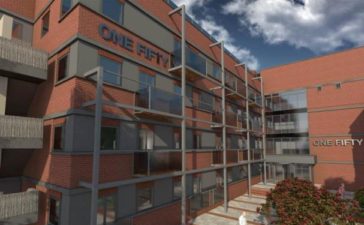

Studio apartment with one bedroom in the city of Swindon – £95000
Developers who create this project, very proud of their brainchild. It is no coincidence, because it is located in...
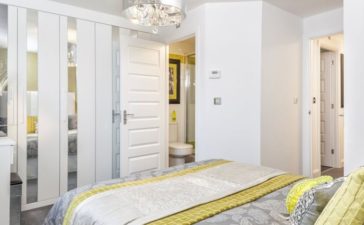

Apartment in Swindon one bedroom – £116000
Stylish and modern new one bedroom apartment occupying a spacious 38 sq. m. View on map Located in the...
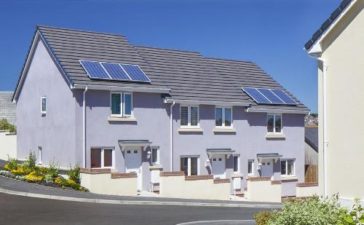

House in Plymouth 3 floors 4 bedrooms £185000
Half the house has 3 floors, four bedrooms with an area of 102,67 sqm £185000, built-in garage and a garden...